





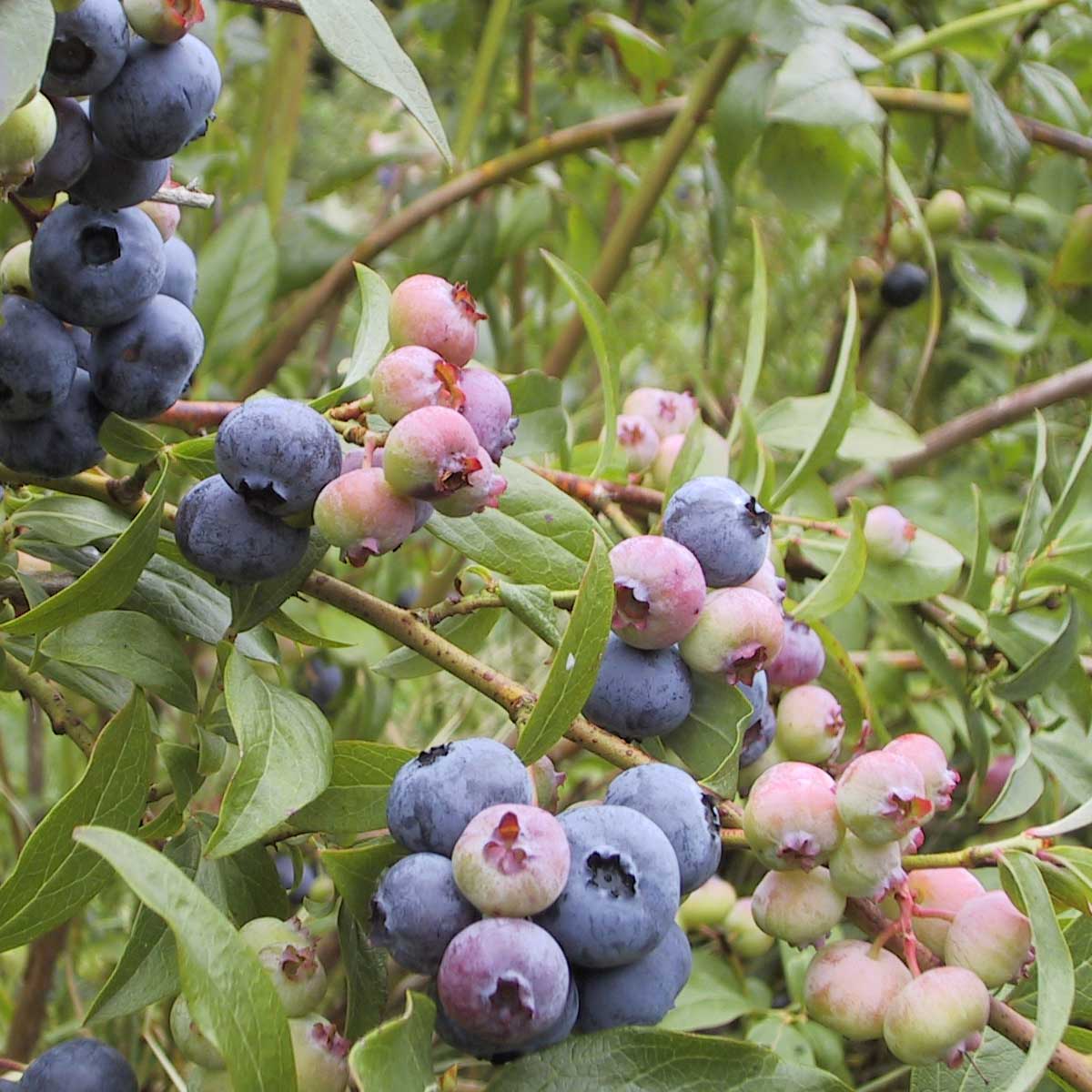

The History of American Blueberries
The large-fruited American Blueberries came to Europe after World War II and on the Lyneburger Heide in Germany, many hundreds of hectares of blueberries are grown. They are also grown in Spain and New Zealand.
Wild Danish blueberries are small, low plants found in nature in Denmark. They produce smaller berries, but are very tasty and high in antioxidants. Wild Danish blueberries prefer dappled shade.
How to plant a blueberry bush
All blueberries are acidic plants that should be planted in acidic soil. When planting new ones, use rhododendron soil/sphagnum. Make the planting hole slightly larger than the lump of the blueberry bush to be planted, fill it with rhododendron sphagnum at the bottom and sides of the hole and plant the blueberry bush.
Blueberries like fertilizer, a long-acting acid soil fertilizer is fine, but you can also use regular fertilizer.
A blueberry bush does not require much pruning, its growth is not very vigorous and it is best to let it grow for several years. When you think it is getting too vigorous, you renew it by cutting out some old branches and making room for new ones.